
TRANSCRIPT:
(This transcript is derived from an automated process. The video recording is authoritative.)
Jewel Burbidge:
I'm going to be talking about the long march for the institutions cultural Marxism is what it is called. And the long march for the institutions is a phrase that became popular at the end of the sixties, but it actually started in the 1920s when we'll explain that. And of course, it's explaining why we who are clear thinkers think that the world has actually gone mad.
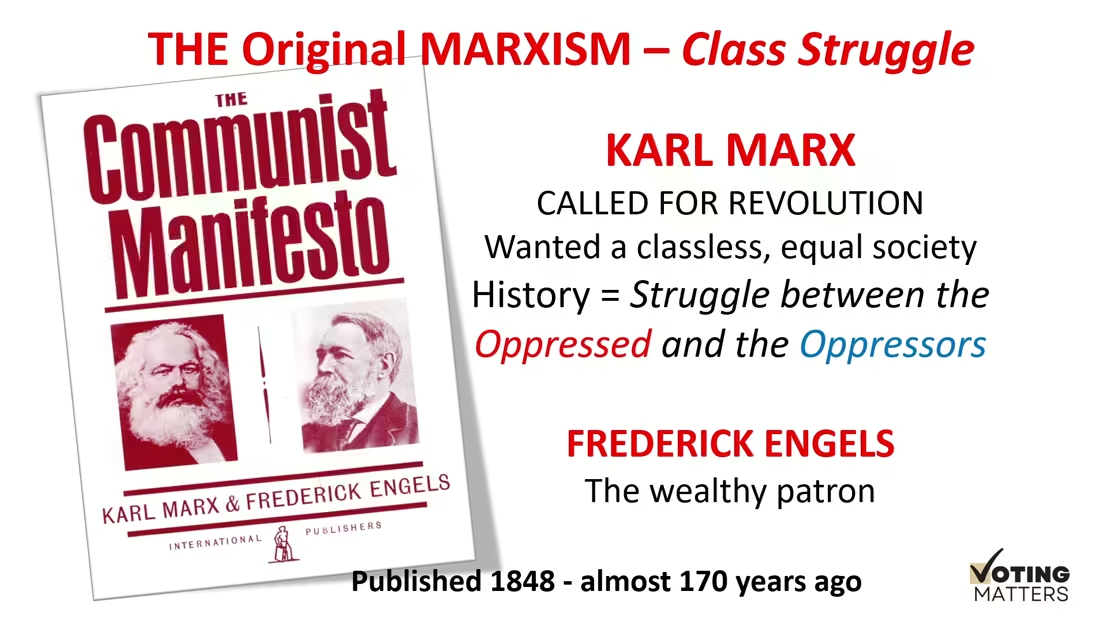
This started with over 150 years ago. Over 170 years ago, Karl Marx and Frederick Engles wrote the Communist Manifesto and started Marxism. Karl Marx called for a revolution. He wanted a classless equal society because he said that history equals a struggle between the oppressed and the oppressors. And that is still the phrase that is in use in this day and age. Frederick Engels just simply was the patron who was behind making it possible for him to concentrate on this and just sit in the library of London and just write his books.
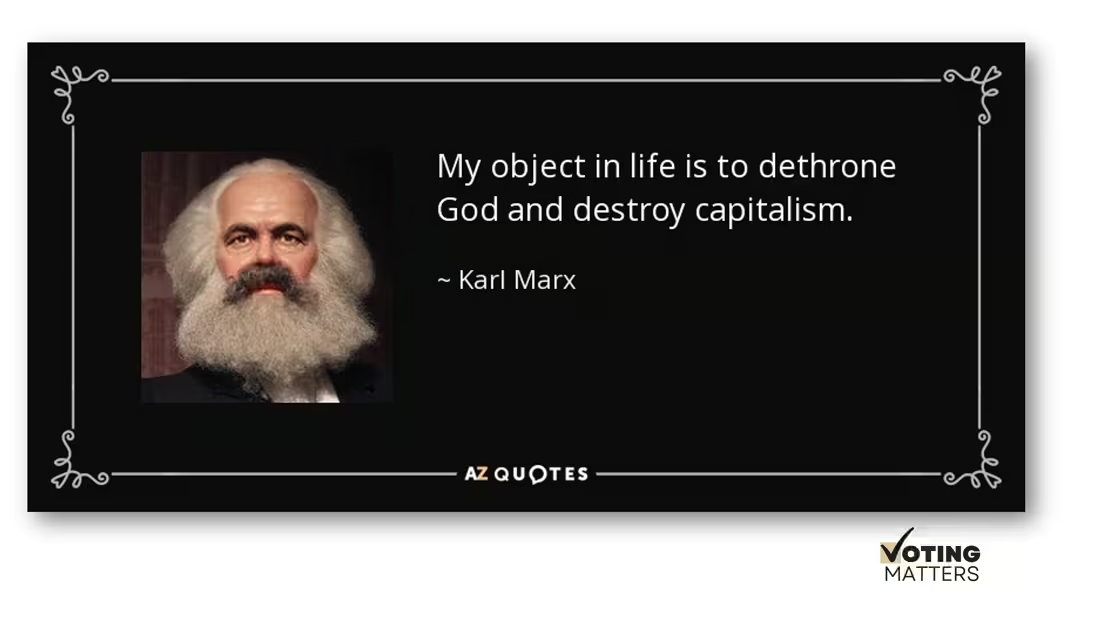
Now, Karl Marx was dedicated to his object in life, was to dethrone God and destroy capitalism. He has never shied away. Well, when he was alive, he never shied away from it. That was the agenda behind everything he did.
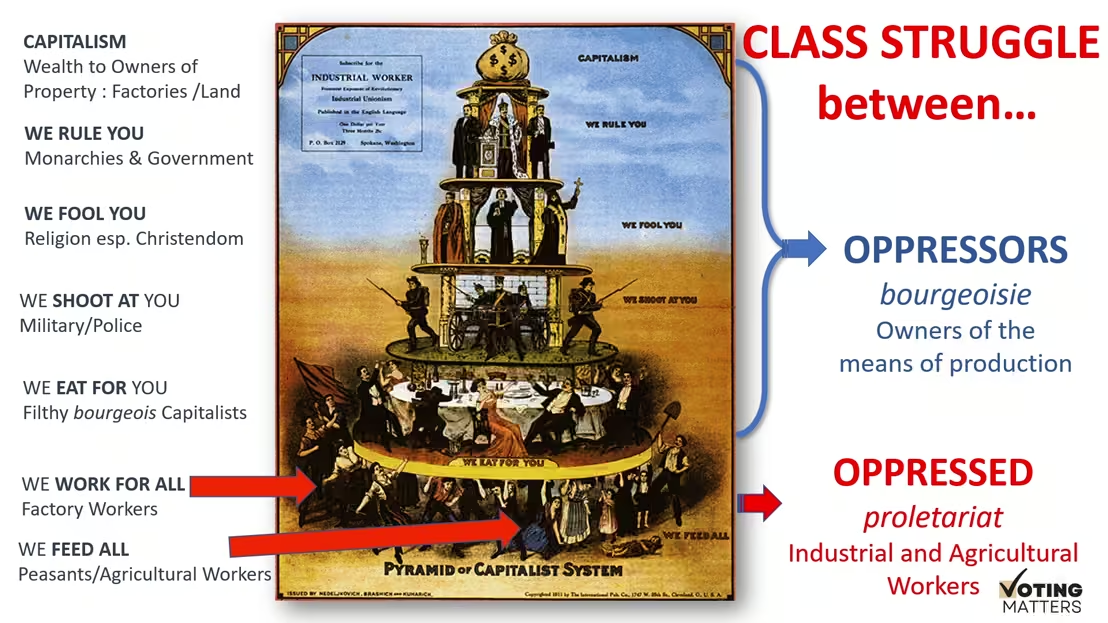
This illustration came out in the first decade of the 20th century. It started in Russia and it was adapted a little bit. And an American socialist organisation put this out in about 1911, and it explains everything about the excuse me approach of Marxism at the top where you see that money bag is capitalism. They say capitalism is at the top, receives the benefit of everything that happens underneath it. And then the second row down is we rule you. That's monarchs and the government. We rule you. We make decisions on your behalf and then we fool you that they're talking about religion, particularly Christendom. They were particularly critical of Christendom.
And then we shoot at you. We keep you in line because of the decisions made by those people above us in that pyramid. And then we eat for you. This is the filthy bourgeois capitalists that Marxists are so critical of people who are enjoying the benefits of capitalism and free enterprise. Then down the bottom, holding everything up, we work for you. The factory workers are propping everybody up as well as we feed all of you the agricultural workers. They were the oppressed that Marx was trying to encourage to have a revolution. And it was always about a class struggle between all those oppressors at the top of that pyramid and the oppressed. The oppressors were known as the bourgeoisie and the oppressed were known as the proletariat, the industrial and agricultural workers. So it was very much a class struggle and he was always trying to mobilise people to join together and have a revolution about this class struggle.
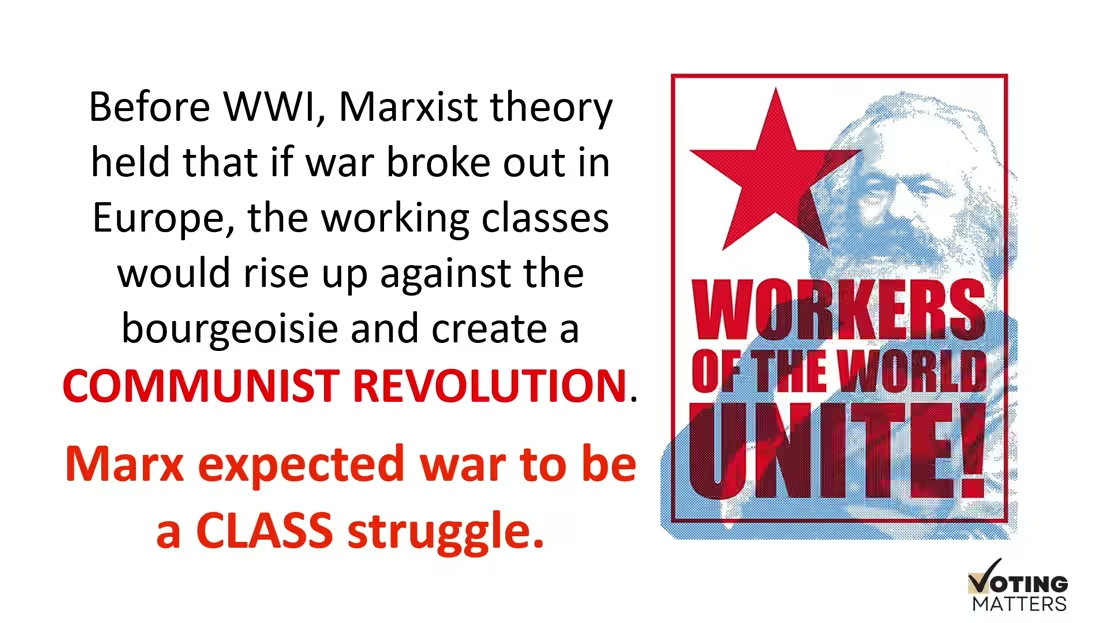
And in fact, before World War I, Marxist theory held that if war broke out in Europe, the working classes would rise up against the bourgeoisie and create a communist revolution because he'd whip them into a frenzy. Of course, hadn't he expected the war to be a class struggle, but it failed.
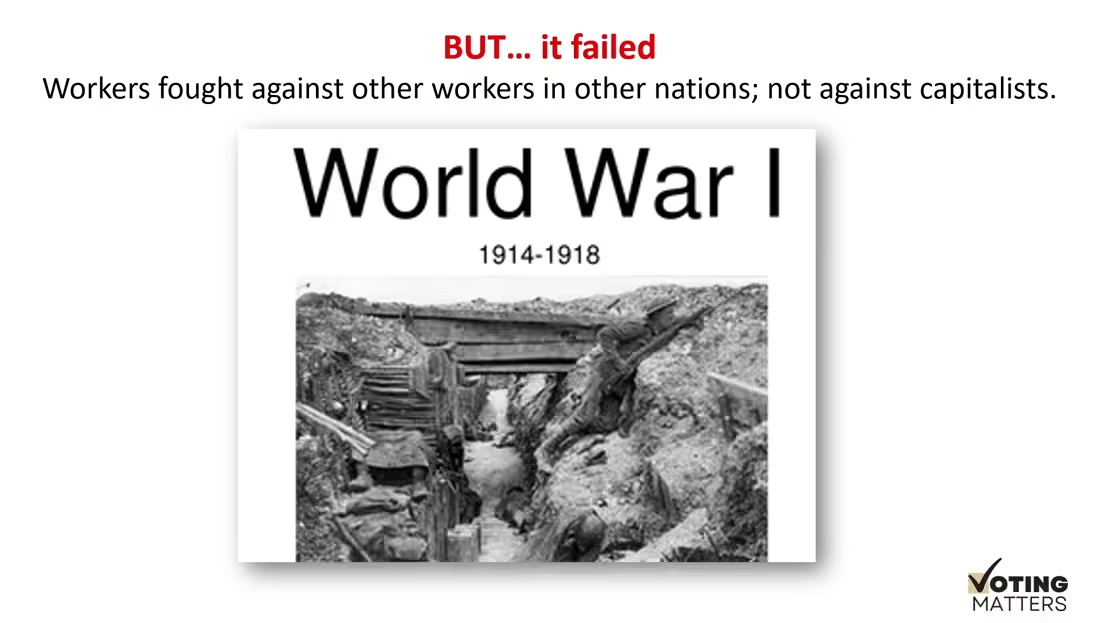
The workers fought against other workers in other nations, king and country and all that stuff, and they did not fight against capitalists. So World War I did not rise the masses.
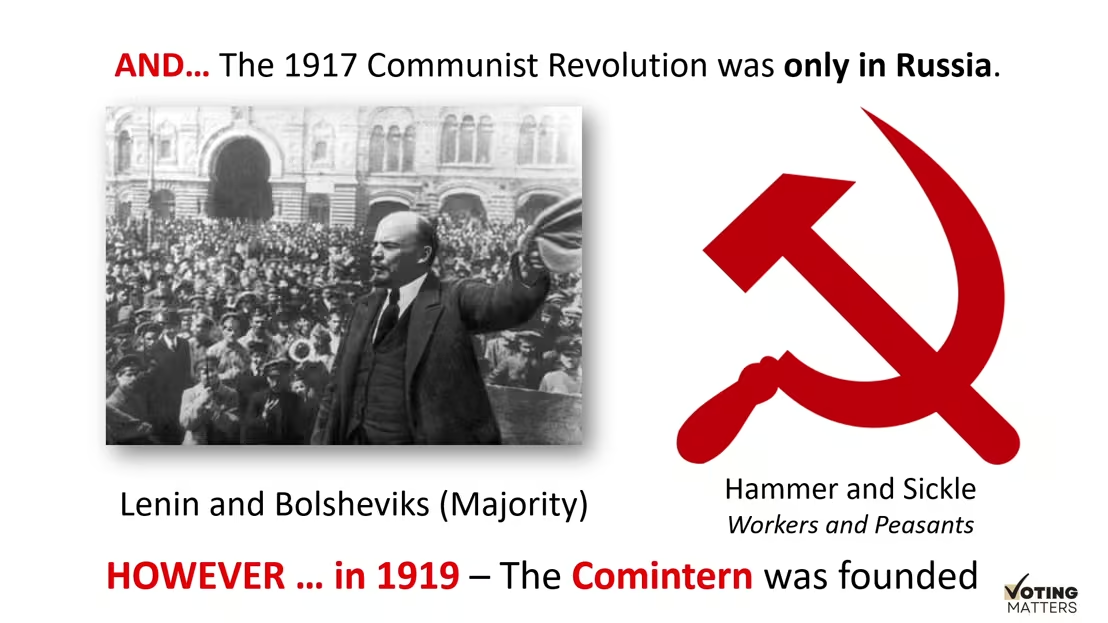
And at the same time in 1917, there was a revolution, but it was only in communist Russia in the Communist revolution. And however, in 1919, it was at least the start of it, it was successful in Russia. And in 1919, they created a thing called the Comm Intern, where the socialist leaning people around the world started negotiating with, liaising with and working with each other.
The common turn had a worldwide movement of socialism and things came out of that.
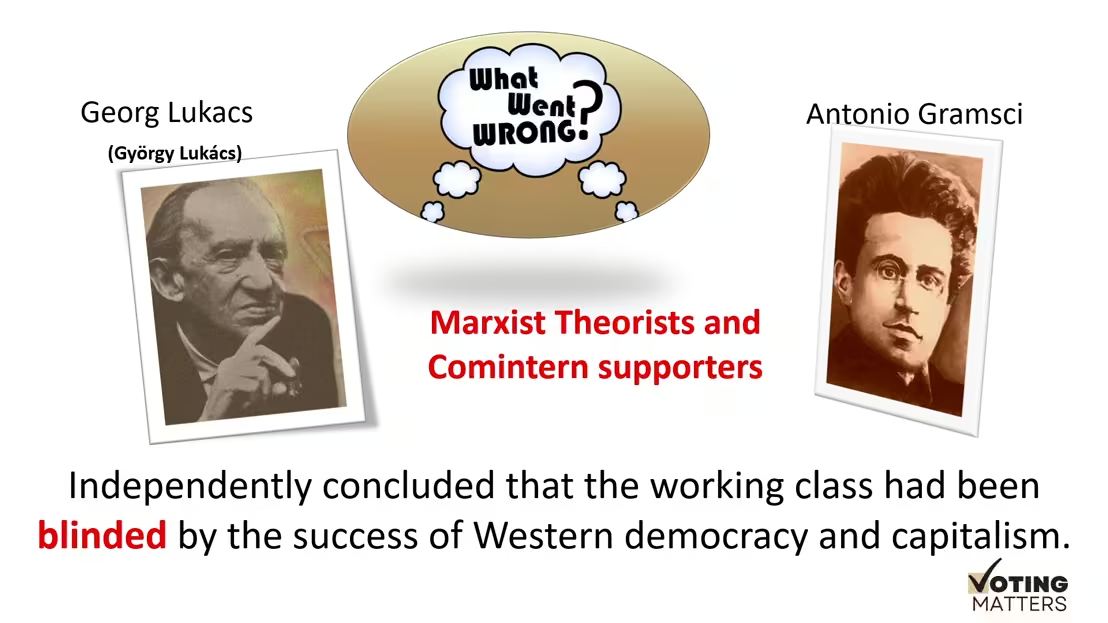
There were two people who were very instrumental in getting things started. George Lucas and Antonio Gramski, they were Marxist theorists and common turn supporters. They were both independently, had nothing to do with each other, but independently. They concluded that the working class had been blinded by the success of Western democracy and capitalism. In other words, people had a job, they had food in their belly and they were happy. So they didn't bother having a revolution. So what were these Marxists to do to get them all on side? They had to think outside the square.
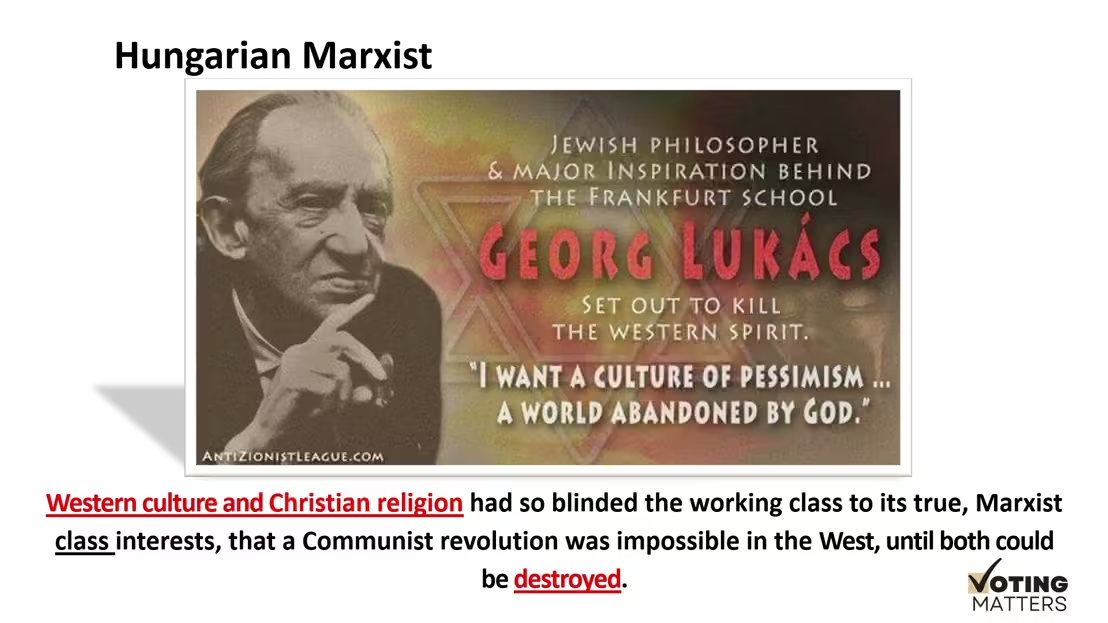
This man is manifestly evil. He's a Hungarian Marxist, George Luas. He was a Jewish philosopher and major inspiration behind what is known as the Frankfurt School, which I'll refer to quite often. He set out to kill the Western spirit, Western democracies.
He said, I want a culture of pessimism, a world abandoned by God. He made no mistake about that. He also said Western culture and Christian religion had so blinded the working class to its true Marxist class interests that a communist revolution was impossible in the West until both could be destroyed. That was the intention. Don't go along with it. Don't just try to change it, destroy it. And that was the Marxist intention, but they weren't getting anywhere at that stage.
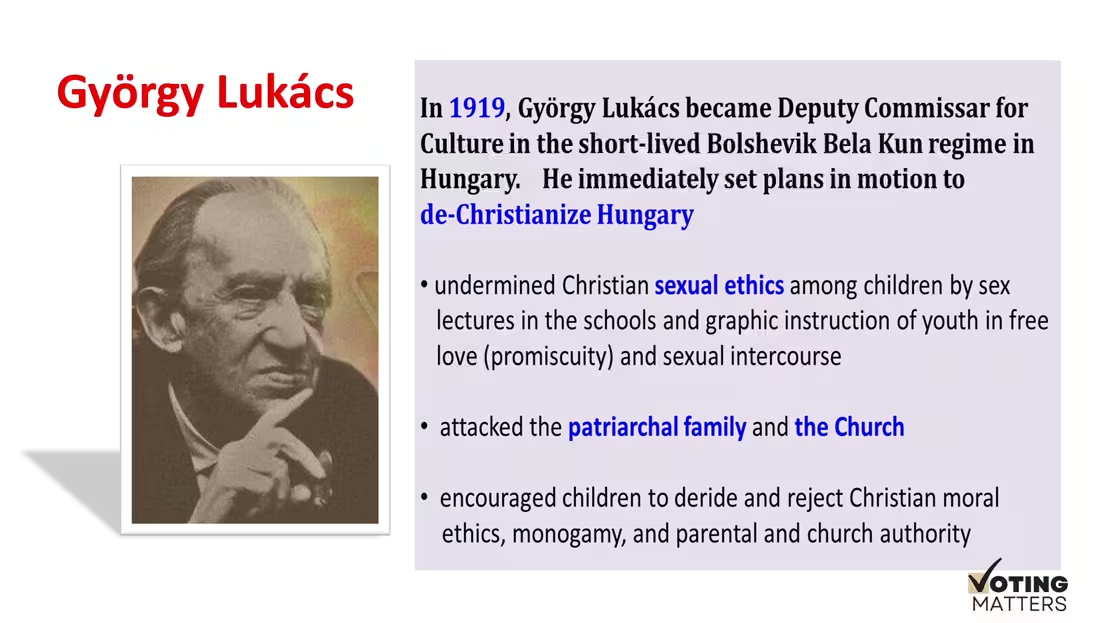
This particular man in 1919, he became the deputy comma of culture in the short lived Bolshevik Becu regime. And he immediately set plans in motion to de Christianize hungry. He went straight into it. He undermined Christian sexual ethics among children by sex lectures in the schools. Remember, this is in 1919, sex lectures in the schools and graphic instruction of youth in love, in free love promiscuity and sexual intercourse.
Sounds like I'm talking about the sixties, doesn't it? This was 1919. He attacked the patriarchal family and the church. He encouraged children to deride and reject Christian moral ethics, monogamy and parental and church authority rebel. He lasted a few months, they chucked him out too much too soon. They threw him out. So the people in Hungary were not happy with it, but that was the revealing of the agenda of what they were on about.
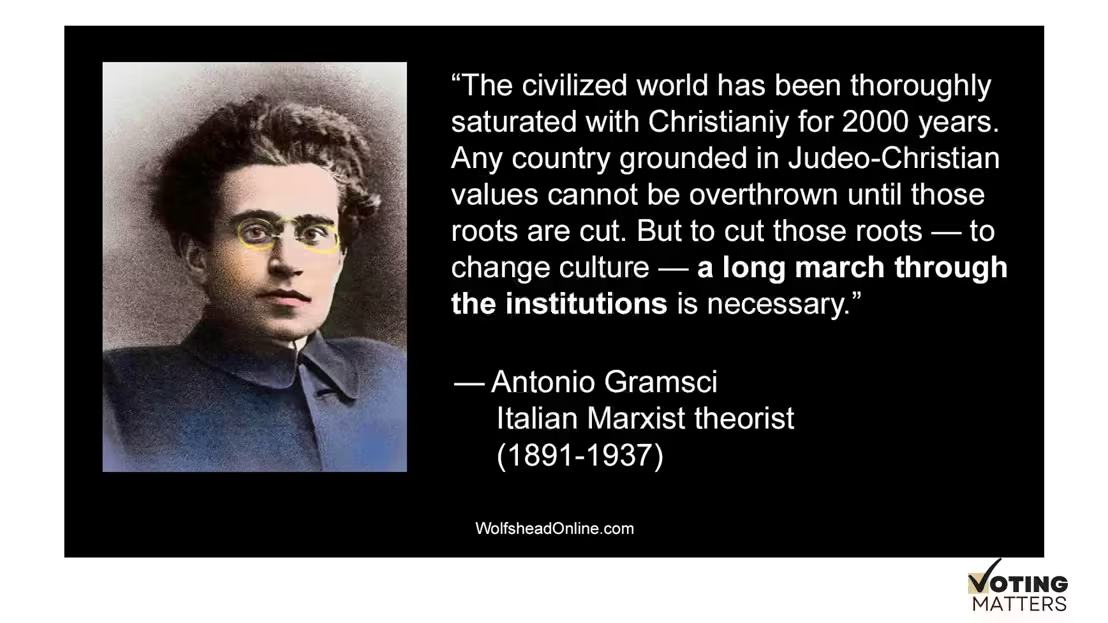
Also round about the same time active in Italy was Antonio Gramski. He said The civilised world has been thoroughly saturated with Christianity for 2000 years. Any country grounded in Judeo-Christian values cannot be overthrown until, sorry, I can't see until those roots are cut. But to cut those roots to change culture along March through the institutions is necessary. He identified the need to go right across every institution and infiltrate and change minds.
He was very successful in spreading his ideas. He was thrown in jail for it. A lot of what he wrote about this was in his prison notebooks, but they were kept and they were resurrected in the 1960s in particular. So keep that in mind. Antonio Gramski started it.
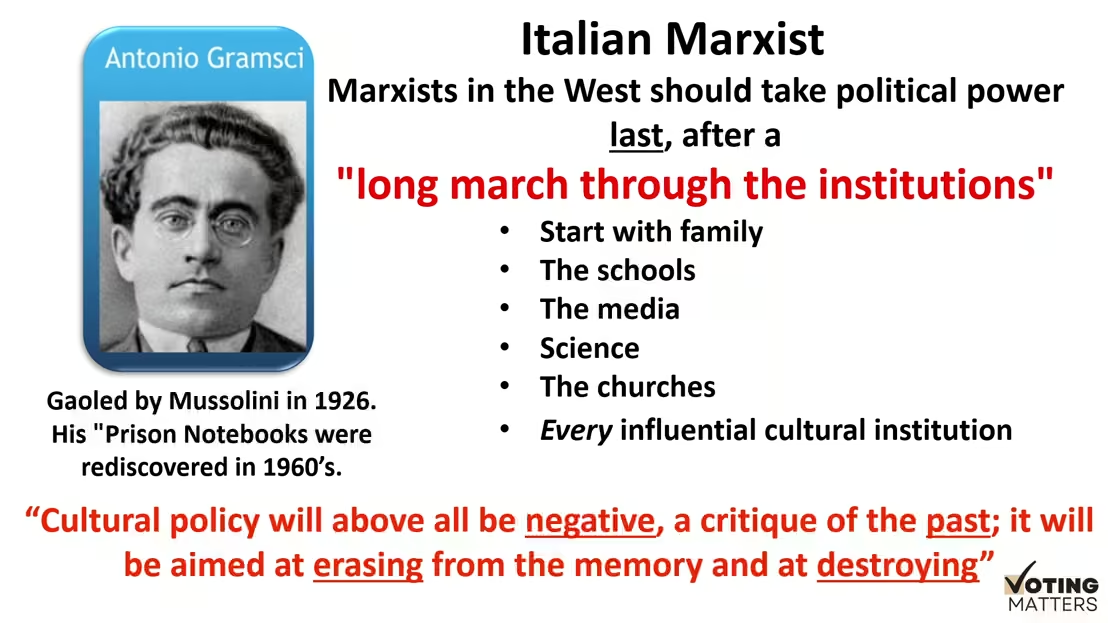
So Antonio Gramski jailed by Mussolini in 1926 because Mussolini didn't like anybody who would usurped some of his power. And he had his prison notebooks. Again, as I said, rediscovered in 1960s. He was an Italian Marxist and he said, Marxists in the West should take political power last after the long march through the institutions. You start with the family, the schools, the media science, the churches, every influential cultural institution, cultural policy will above all be negative, a critique of the past. It'll be aimed at erasing from the memory and at destroying. Do you recognise the attitude that you see around you and everything that we are confronted with today?
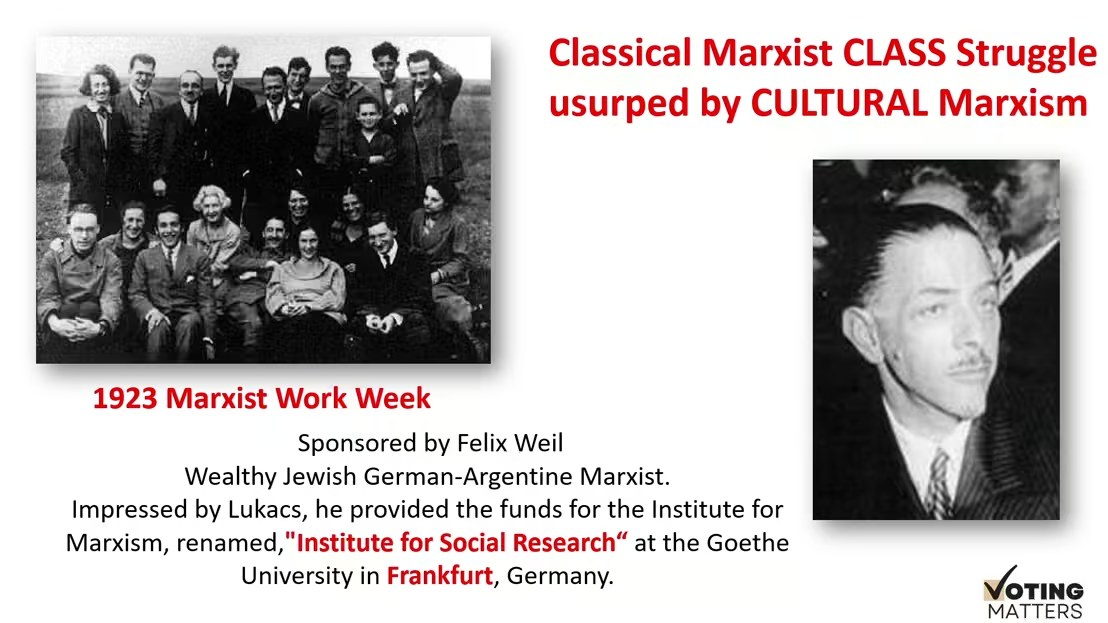
Now, it really came together in 1923. There was a Marxist workweek in Germany and it was funded. It was a classical Marxist class struggle, and it was usurped by the idea of cultural Marxism, which came out of this very important event in 1923 that was funded by Felix Wheel. He was a wealthy Jewish German Argentine Marxist, extremely wealthy. Most of the money was from his dad. He didn't actually do a day's work in his life and he just spent it. He was impressed by Lu hacks. A lot of the really radical ones were impressed by axe. He provided the funds for the Institute for Marxism and renamed it the Institute for Social Research at the Gertha University in Frankfurt, Germany funded everything, just threw money at it. It was just an absolute cornucopia for the people who got involved with that. And he was behind it, big money and notice he was Jew. Interesting.
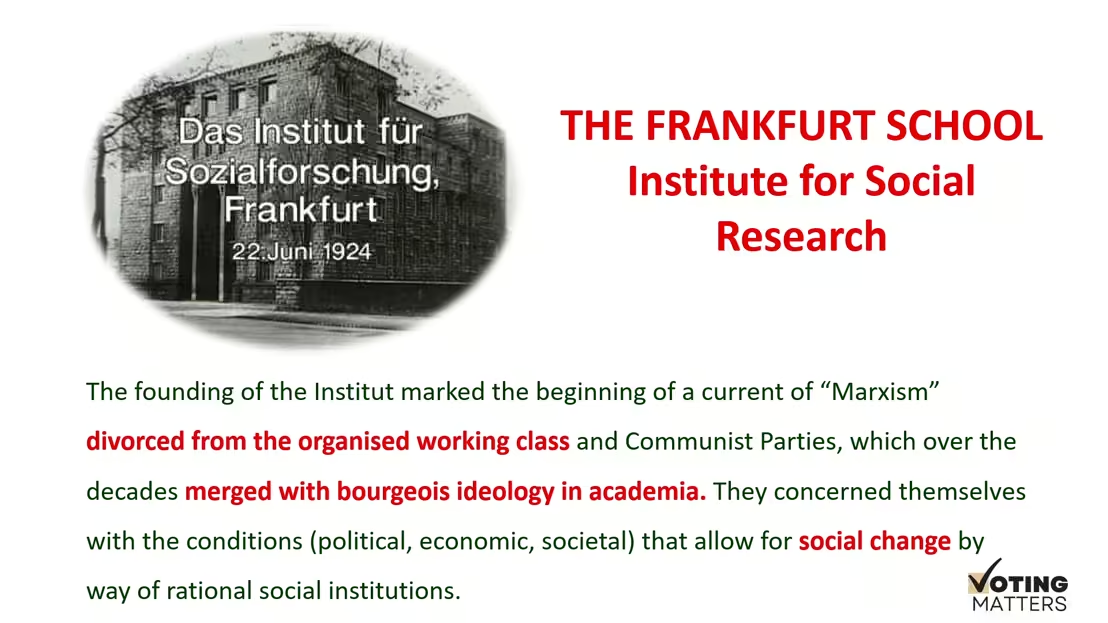
So this Frankfurt school, the Institute for Social Research, the founding of the institute marked the beginning of a current of Marxism, divorced from the organised working class. How many people on the left side of politics will still tell you today that the left side's for the worker rubbish. They abandoned it right back then. And they're just pulling the wool over the eyes of individuals who still think that's the case. And the communist parties, which over the decades merged with bourgeois ideology in academia, they concern themselves with the conditions, political, economic, societal that allow for social change. There's the operative word change, got to throw everything out and change things by way of rational social institutions. They use the word rational. I beg to differ.
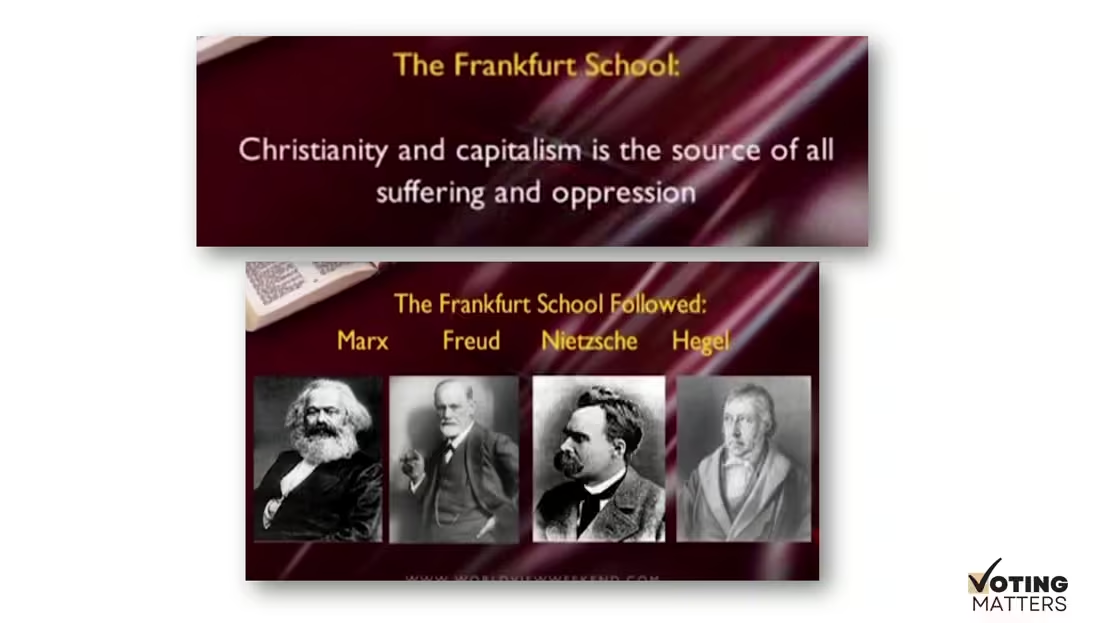
The Frankfurt school had as its ethos, Christianity and capitalism is a source of all suffering and oppression. That's what they were going to convince the world about. And in many cases, they have convinced a lot of people about that. The Frankfurt School followed Mark's, Nietzsche and Hegel. All their teachings were well-established and they amalgamated them all into this cultural Marxism. There are some of those inspired by Marx, of course, who said his object in life so dethrone God and destroy capitalism.
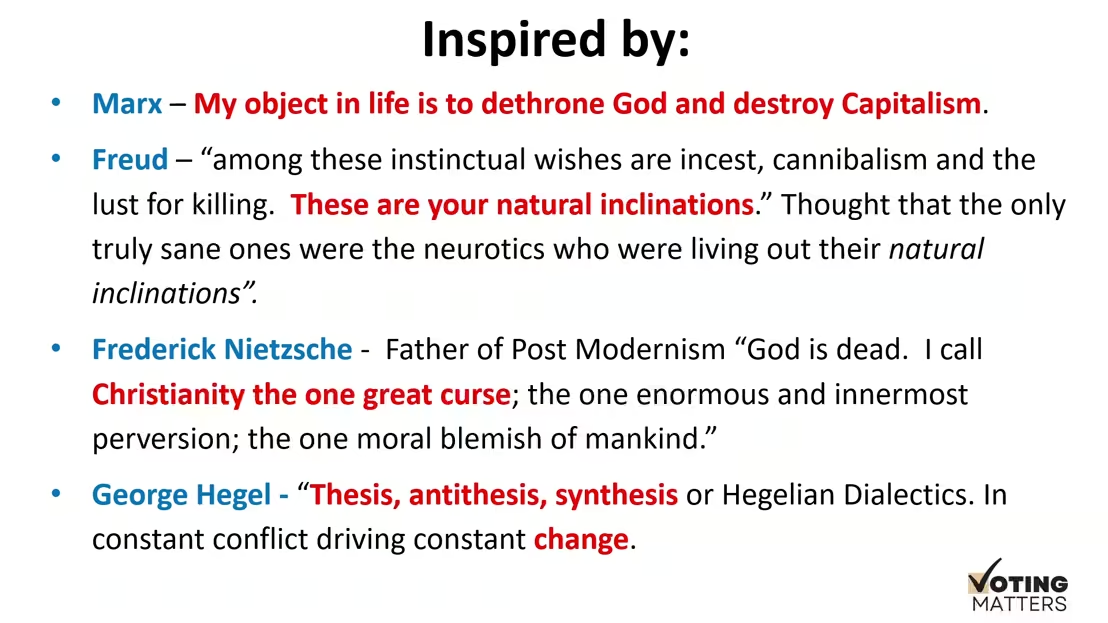
Freud, I bet you didn't know this about Freud. He said, among these instinctual wishes are incest, cannibalism, and the lust for killing. These are your natural inclinations. And he thought that the only truly sane people in the world were the neurotics who were living out their natural inclinations. Freud, very, very suspect, moral compass that man, Frederick Nietzche, father of postmodernism, God is dead. He said, I call Christianity the one great curse, the one enormous and innermost perversion, the one moral blemish of mankind. So they put themselves up on a pedestal and they put everything else down below. And George Hegel, he gave them the tools to make this happen in discourse and the narrative, you would've heard of thesis antithesis, or you could say antithesis and synthesis or the Hegelian dialectics. They still use that in this day and age. Those of you who are old enough will remember Bob Hawke when he came in introduced us to the word consensus.
Remember that we'd never heard of that word before. And he brought in that word consensus, that the model is you have a thesis, you have an idea, and then somebody will say, well, that's not a good idea. I oppose that idea. So I'm anti that thesis. Or you could say is pronounced antithesis. So there's a thesis, there's an antithesis. They don't agree, they're never going to agree. So to make some progress, the people with the thesis will give up a little bit. The people with the antithesis will give up a little bit and they'll come together with what is known as a synthesis, which is a little bit of watering down of both sides to be able to move forward with a new baseline, this new synthesis, that new synthesis becomes the new thesis, and then they start again. And so the people with the antithesis will chip away and take a little bit more away.
So there'll be another new synthesis, which will have got some more progress for what they really wanted in the first place. So they chip, chip, chip away, and they don't give up. Remember, we all voted for the Voice and they're still coming. They do not give up. The Hegelian dialectics is still in use in this day and age. It's always about constant conflict driving. Constant change never stops.
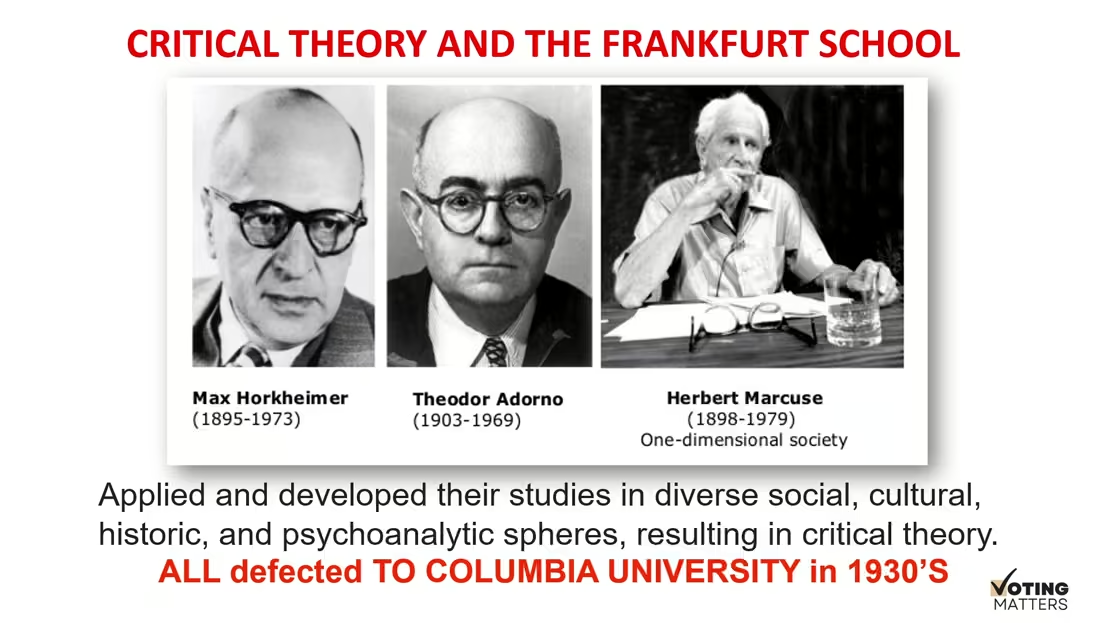
These three gentlemen were very much part of making that happen, particularly in America. The critical theory in the Frankfurt school featured Max Heimer, Theodore Orna, Herbert MCUs, they all came out of Germany in the 1930s. They all defected or were sent to America because of the political climate. This was when Hitler was around with the Nazis in Germany. They were all Jews. They went to Columbia University in New York and they were just given everything that they needed.
They had all of their lectures in German in that political climate at that time of the world. And it just happened. I can imagine somebody trying to do that in this day and age. It was just laid open for them at Columbia University in New York. They applied and developed their studies in diverse social, cultural, historic, and psychoanalytic spheres. The social ones, all the social areas resulting in critical theory. And they all defected in the 1930s.
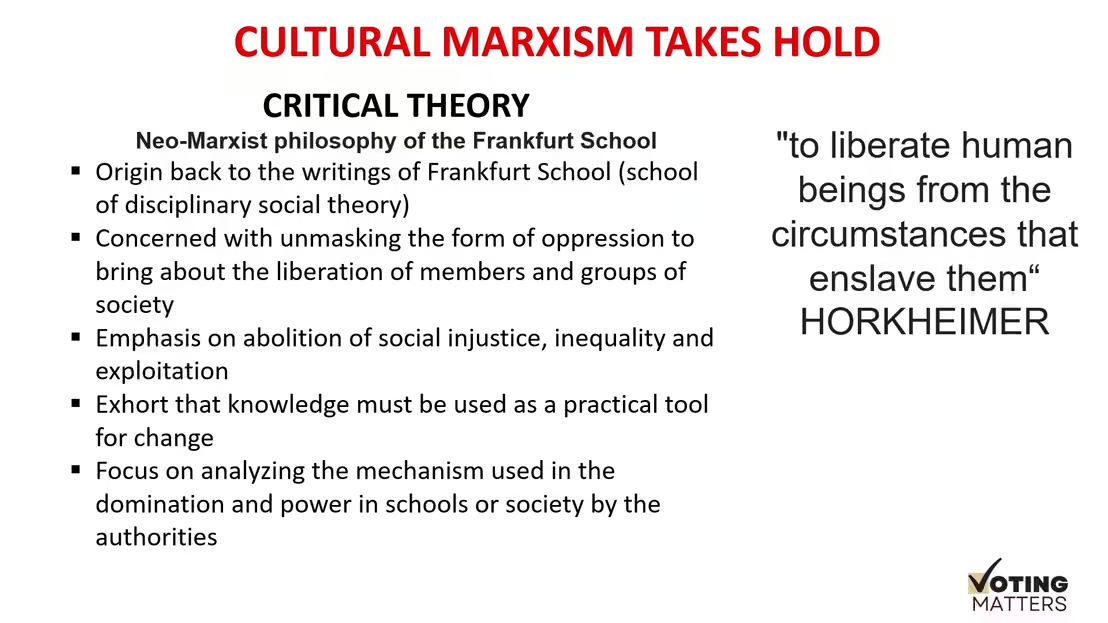
The cultural Marxism takes hold critical theory. What came out of all their efforts is the neo-Marxist philosophy of the Frankfurt school. And Heimer, one of the drivers said, it's to liberate human beings from the circumstances that enslave them. There's that concept of you poor people, these people in power are enslaving you. We will free you. So the cultural Marxism was about its origins back to the writings of this Frankfurt school, and that went on for decades and decades. The Frankfurt School concerned with unmasking the form of oppression to bring about the liberation of members and groups of society, emphasis on abolition of social injustice. Look at all the minorities rising up. Look at all the injustice somebody did 500 years ago, and you've got to pay for it. Okay, exhort. That knowledge must be used as a practical tool for change and nothing but change. Focus on analysing the mechanism used in domination and power in schools or society by the authorities. And those authorities also included parents very much against parental authority.
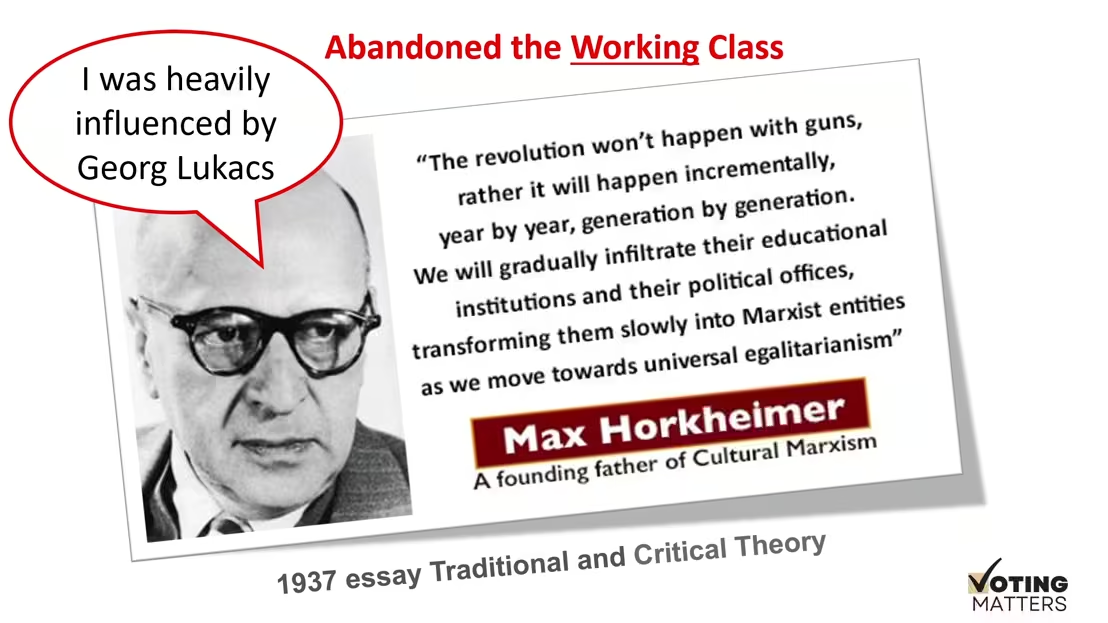
Heimer, dreadful man. This is when they started to abandon the working class. He said, the revolution won't happen with guns. Rather it will happen incrementally year by year, generation by generation. We will gradually infiltrate their educational institutions and their political offices. They've done that, haven't they? Chip chipping away. And we will be transforming them slowly into Marxist entities as we move towards universal egalitarianism. The reality is the rest of the world will be equal in their utopia, but there will always be a ruling class of elites. There's always somebody at the top enjoying the spoils. He was a founding father of cultural Marxism, of course, and he was extremely influenced by George Luox.
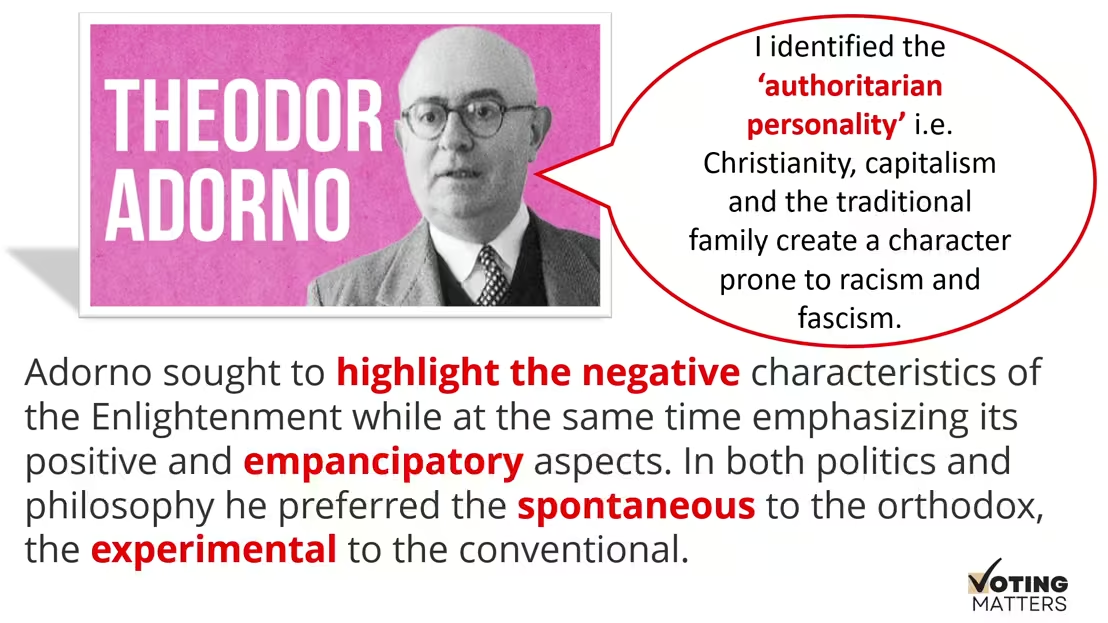
Theodore Oona, right? Another one, very active in America. Oona sought to highlight the negative characteristics of the enlightenment. Remember in the enlightenment, slavery was abolished and there were all sorts of positive things that came out of that.
But there were plenty of negative things as well, while at the same time emphasising it's positive and emancipatory aspects in both politics and philosophy. He preferred the spontaneous, don't worry about anything. Yay. Let's just do it. Yeah, to the orthodox, the experimental to the conventional. Forget tradition. Forget tried and true tested things. And this is where he really nailed it. And this went on for many years. This attitude. I identified the authoritarian personality. That is Christianity, capitalism, and the traditional family create a character prone to racism and fascism. In other words, he's saying to kids, rebel against your parents. Rebel against authority. Don't accept anything. So this is where the seeds were sown by these people. And mostly it started gaining ground in America through Columbia University and thereby spread around the world.
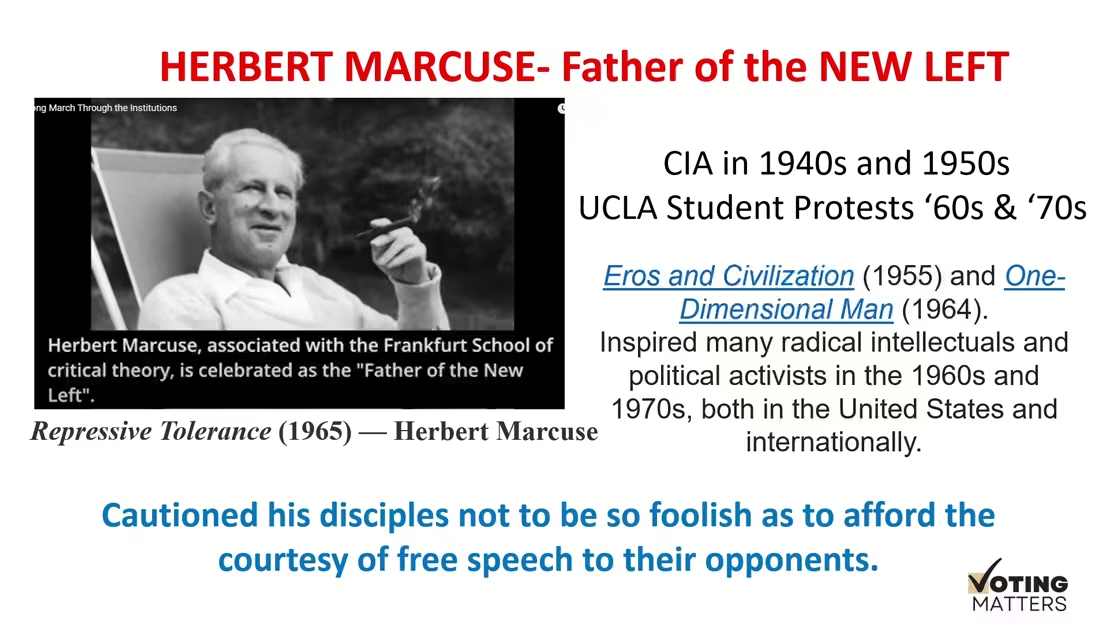
And then this guy, the man Marcuse, boy did he hit the ground running in the sixties.
He came in the thirties with the other two in the 1940s and fifties. He was one of the founding fathers of the CIA in America at University of California where he later went to and spent many years teaching there. He was very much part of the student protest, particularly about Vietnam war, and he encouraged them to just rebel and tear everything down. He was against all authority. He wrote a book called Aeros and Civilization in 1955. It was all about sex. Have a lot of sex, enjoy sex. Everything's about sex. It's good stuff. Don't do anything else. And the one dimensional man, he was inspired. He inspired many radical intellectuals and political activists in the sixties and the seventies, very prominent with those people both in the United States and internationally. By then, all of this cooperation with all of the socialists and communist organisations had spread all over the world. And they were all interacting with liaising with each other. He cautioned his disciples not to be so foolish as to afford the courtesy of free speech to their opponents. I wonder if Julie in Man Grant has studied this man, right, our wonderful commiss, right? Don't let them know anything. Forget free speech.
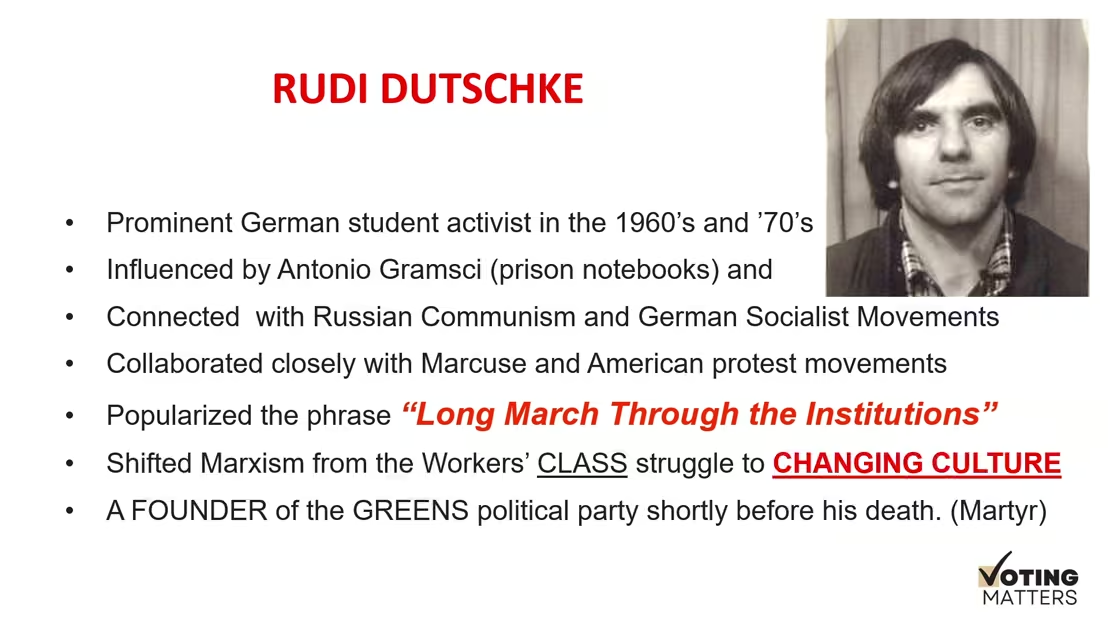
And then at the same time, in Germany, very prominent was Rudy Dutschke. He is put on a pedestal by many people on the left side of politics. He was a prominent German student activist in the sixties and seventies, influenced by Antonio Gramski. He studied Antonio Gram's prison notebooks and started to apply them. He saw the concept of the long march for the institutions, and he connected with Russian communism. He was connected and German socialist movements, very, very active in those things in Europe. He collaborated closely with Cusa, very often went to America and American protest movements, very active activists, if that's the word, that sums it all up. And he popularised the phrase Long March to the institution. Many people attribute it entirely to him, but he got the idea from Gramski. It just became very prominent in the lexicon, in the narrative in the 1960s. Through his efforts, it shifted Marxism from the workers' class struggle to changing culture.
And that's exactly what the agenda is about. He was also many people unaware of this. A founder of the Greens Party, okay? It was just before he died that he was part of the founding organisation for this. He died, which was the result of a previous injury. But he is martyred by the Greens movement. Every year they have a ceremony to remember. Rudy Dutschke, the founder of the Greens Party, as they say, right? Socialism, communism background, all tied together. And I might say they have an adopted child, the Teals in this day and age as well, right?
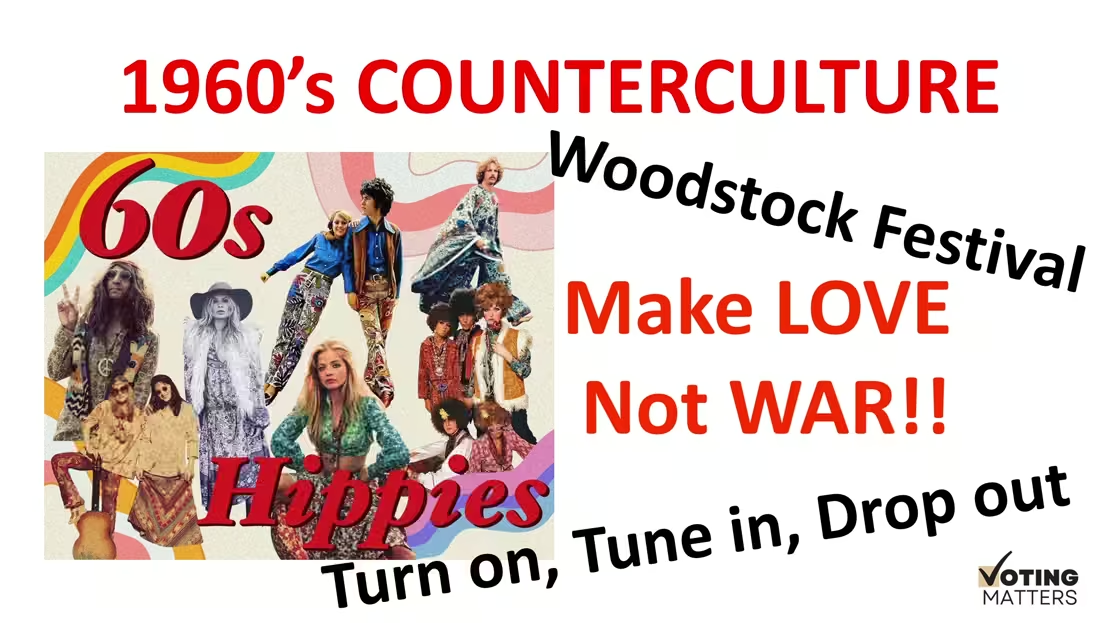
And then it really hit the fan in the sixties. Those of us who are old enough to remember the world changed in the 1960s. The hippies took over everything. Make love, not war. Marka came up with that. Make love, not war, don't do anything about the Vietnam War and all those things that they're talking about.
And there was another one, turn on, tune in, drop out. Just go with the flow. She'll be right, mate. Sex, drugs, rock and roll. It was on in the sixties, completely different world to the 1950s that I remember as a child. And of course the Woodstock Festival really manifested exactly what was going on. What was it? Was it half a million or a million people turned up in that field that weekend? It was at a million million people. Absolutely astonishing. The world was a gust and all of these young people turned up. They were libertines, they were free love. There was drugs, you name it. There was plenty of free sex. It was just simply astonishing. And that was the sixties. People just did not recognise what was going on. This was as a result of all these baby boomer kids who had been indoctrinated in the education system about cultural Marxism.
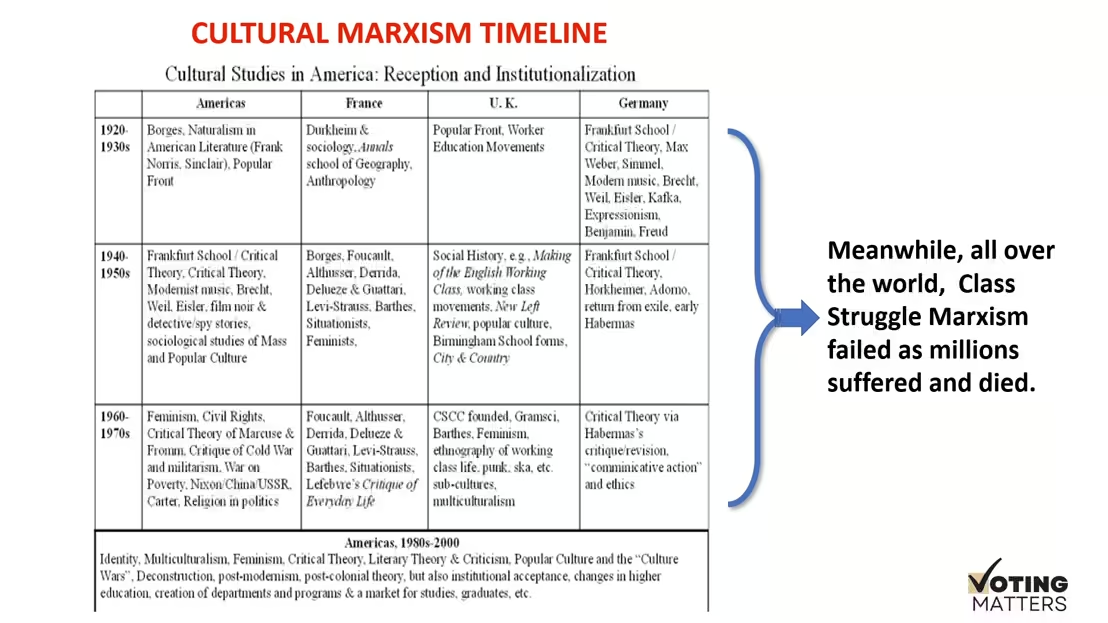
And they came out into the universities in the 1960s, right around the world. It spread everywhere. It is too small to see there, but you see all those different time periods there. And you have the Americas, you have Europe, you have UK, Germany, France rather. It was happening all over the world, lockstep around the world as it is today. When something happens over there, pretty soon is happening over here as well. It just all follows one thing after another.
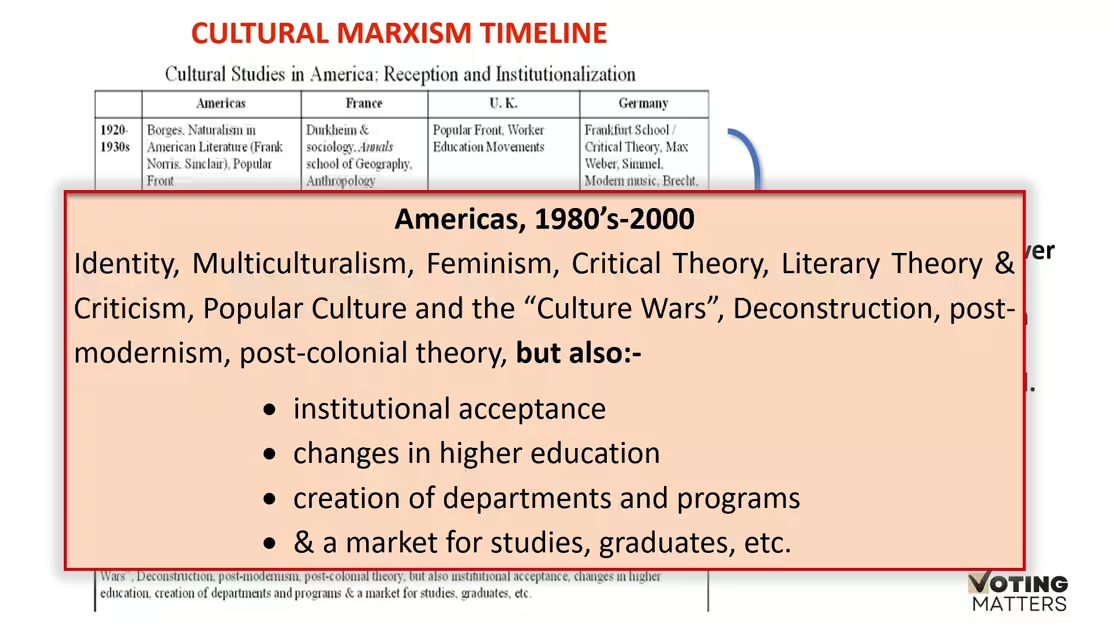
And in Australia, very much like America, this is about America. But you can pretty much say it was the same in Australia in the 18th to two thousands, identity. That's when it started to take hold. You've got to be labelled with an identity and then we will give you some privileges or we will attack you because of your identity. Multiculturalism, feminism, critical theory, literary theory and popular culture, and the culture, wars, deconstruction, post-modernism, post-colonial theory.
But also all of those things which are radical, which are very aggressive, which attack the norms. They became accepted in the institutions. There were changes in higher education to enable this to happen. There were creation of departments and programmes. How many social departments are there in every university in this day and age? How many of the STEM subjects take prominence in universities? There are just as many social departments as there are with the skill sets. And of course, all of these people coming out of this system created its own market for studies, graduates, institutions, infiltration into the commercial world as well. It spread throughout the world, generation by generation, step by step. That was the intention. They're very patient.
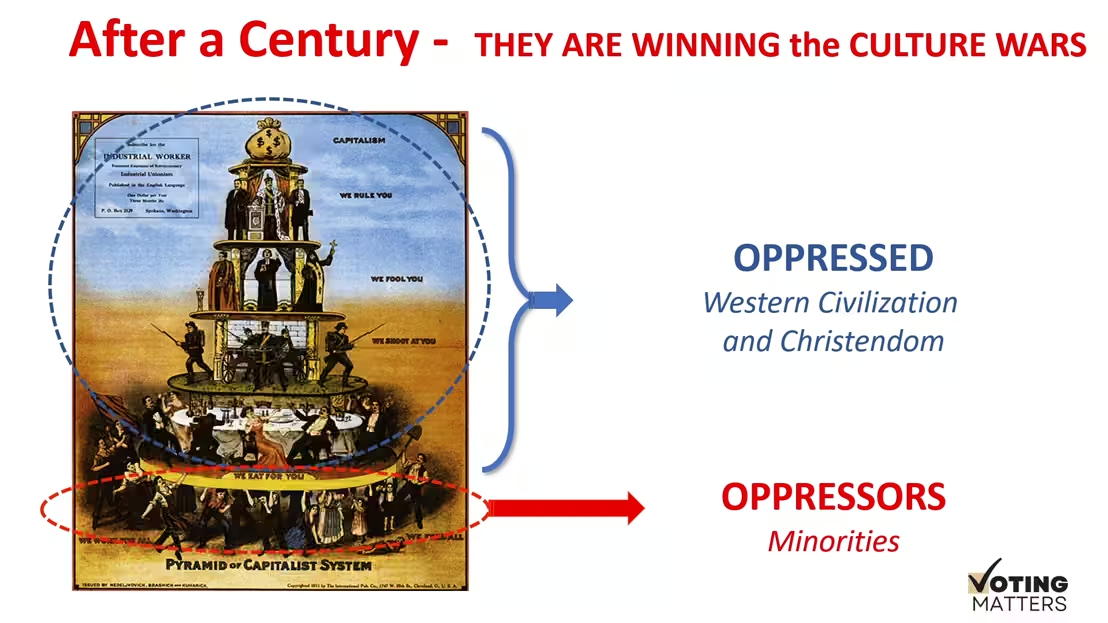
So after a century, they're winning. The culture wars. That pyramid now looks like this. The oppressed is western civilization and Christendom and the oppressors are the minorities. They get prominence, they get doors open for them. They can do pretty much anything they like, and they're getting away with it. And the western civilization is on its knees all over the world.
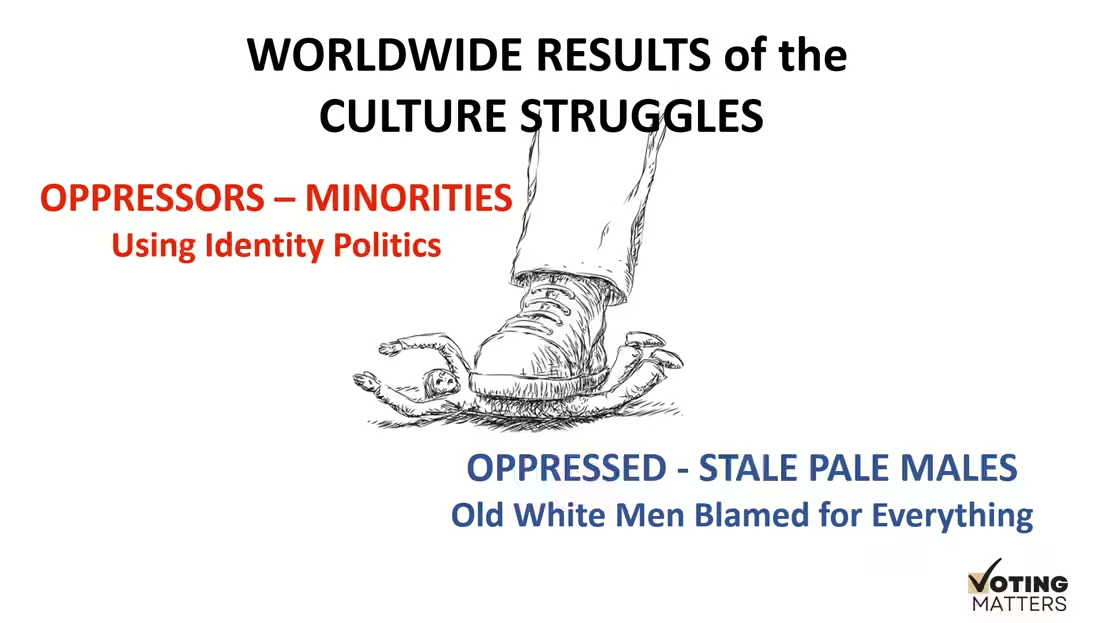
In fact, this is the result of it. The oppressors are their minorities using identified politics. And the oppressed are what is known as stale, pale, male, old white men. They co the blame for everything. It's so true. Is it not so true?
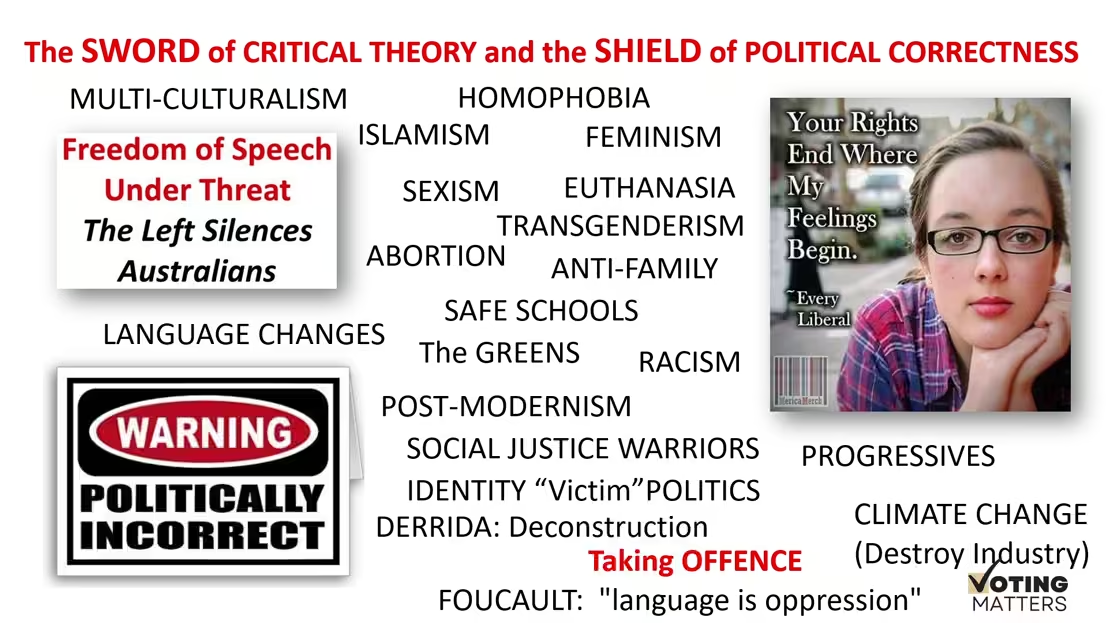
They use the sword to attack of critical theory and they protect themselves with the shield of political correctness. Freedom and speech is under threat everywhere in the world, particularly here in Australia. Look at what's happening now with the identity thing coming up, the ID thing. And look at this little possum. Does she not embody exactly what it is all about? Your rights end where my feelings begin and you don't upset me. I will feel oppressed. Don't do that. I have rights.
Everything is deemed politically incorrect. You can just make up a new word and it'll be politically incorrect because of its derivation. It doesn't matter what you do, you're under attack. And that's just a sample of the stuff that is thrown at everybody all over the world. Under cultural Marxism, everybody takes offence at everything and they will attack anybody who dares to mention anything. How many people say, oh, you can't say that these days. You can't say that. And I say, I'll say what? I bloody well. Like I'm old and I don't care. Bite me. I will not bend. Yes, it is everywhere. It's all over the world.
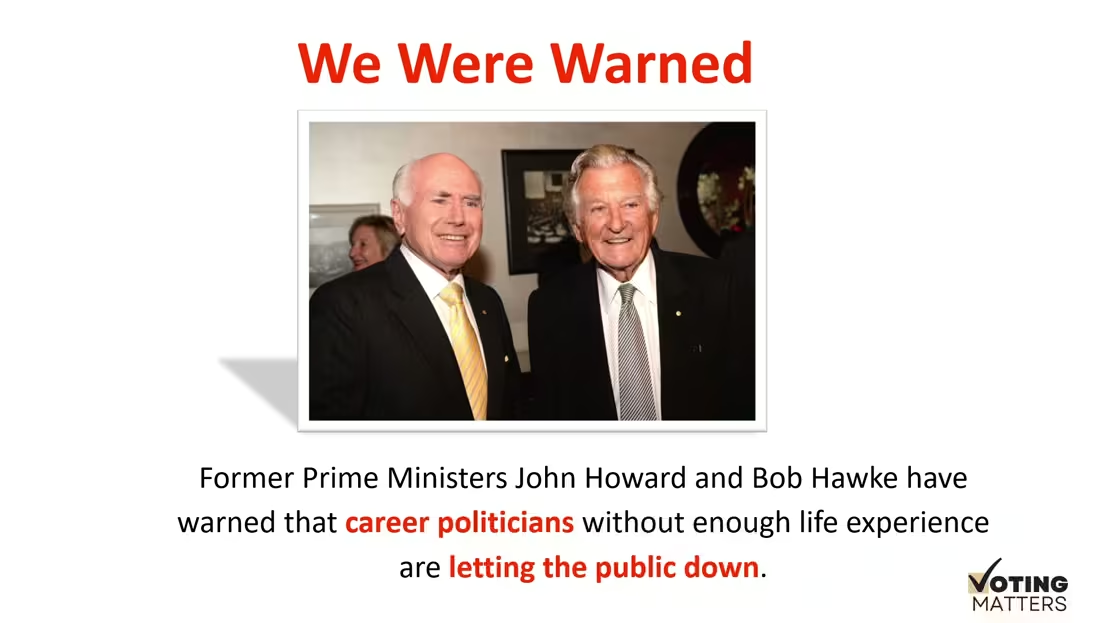
Now, we were warned there were a lot of people warning, but this was at the Sydney Institute in the 1990s. John Howard and Bob Hook were at an event. Both of them said that they warned the career. Politicians without enough life experience are letting the public down. Those career politicians are very often the product of the institutions they have come out of. In the left side of politics, they go through the union, cradle to grave being sheltered. And on the right side of politics, you have a lot of young who just go straight into the political offices of political mps. They don't have enough life experience, and they end up getting priority to go into politics. And they make decisions that affect all the rest of us. And all of them have come out of the long march through the institutions, which has been extremely successful.
That's why so many people would say those sides of politics in this day and age are two wings of the same bird, because the people who are in those organisations have been indoctrinated with the same agenda all over the world.

So what can we do as an individual sitting here in the suburbs in Queensland, Australia? What can you do? You feel helpless? Well, you vote okay, and you put politicians in. You've got to be responsible about who you vote for. We need people in government who understand what's happening, who are strong enough to wind back the destruction of our civilization. So you'd better get to know the people who put up their hand to be voted on because you want to know what they stand for and how strong are they? How well informed are they? Or are they just a puppet of a political party doing exactly as they're told?
They are dangerous people. You've got to know your candidates. Your children are depending on you to choose wisely. Get to know them. You only have to know the ones in your local electorate. That's all you can vote for. Take the time to find out who they are. Have a cup of coffee with them if necessary. Find out what makes them tick because these people are going to make decisions that are going to affect our lives. We've all been through what happened in COVID. They got it wrong. Everybody got it wrong. So if we're going to have something like that, come again. We want to know that people making decisions know what's going on, and we'll listen to the electorate. Take the time to get engaged in politics. Your children depend on it. And why would you do that? Because voting matters. Thank you.